
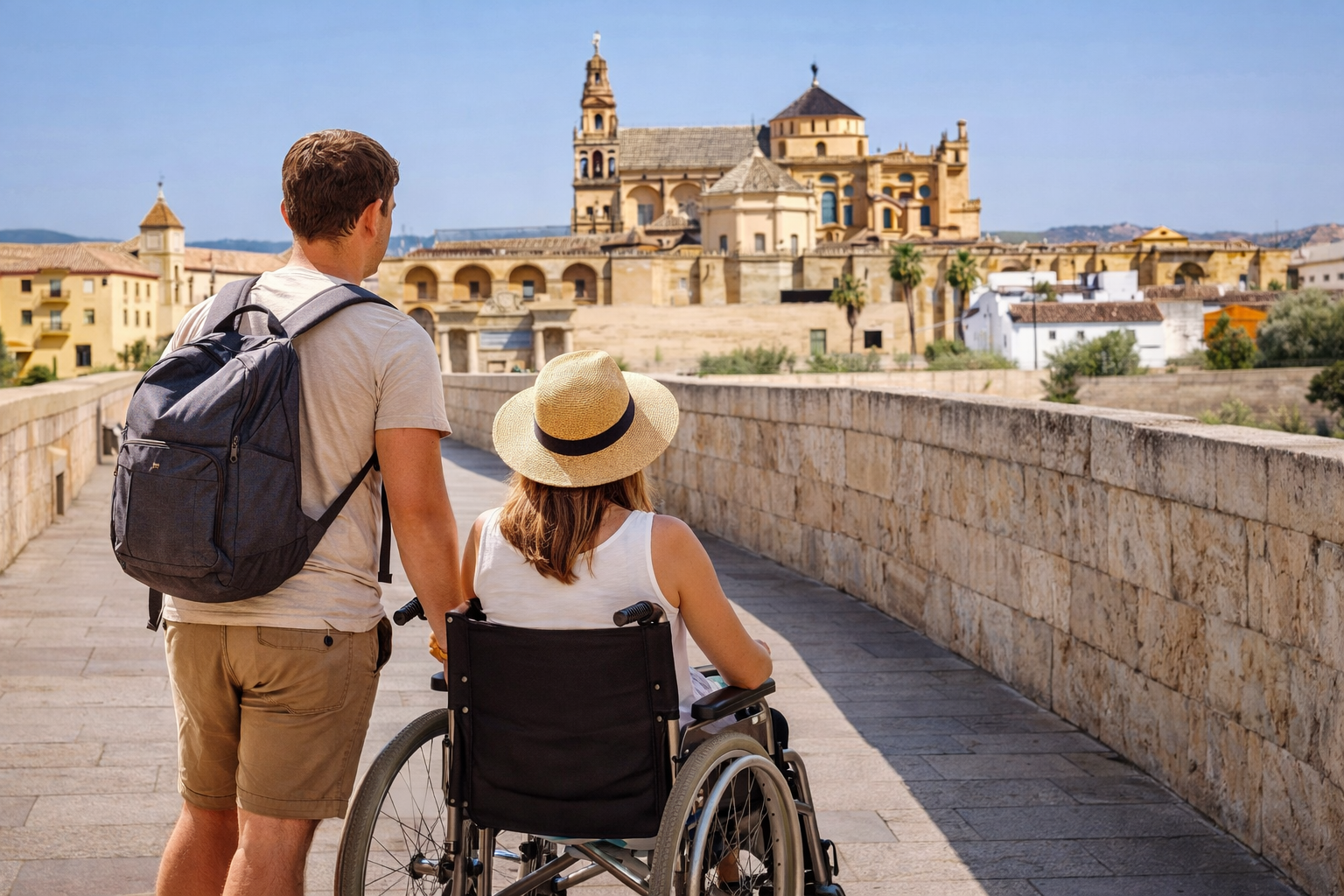
Yes, you can visit the Mezquita-Catedral de Córdoba in a wheelchair. If you’re planning to visit the Mezquita in Córdoba in a wheelchair, it helps to know what to expect before you go.
Official tickets Mezquita de Cordoba
That said, this is still a building that dates back more than a thousand years, so accessibility is not perfect everywhere. With the right preparation and expectations, however, you can enjoy almost the entire experience comfortably.
How accessible is the Mezquita overall?
Once you arrive at the Mezquita, you’ll quickly notice that accessibility has been taken seriously. The monument has been adapted over time to make it easier to navigate, without compromising its historic character. Most of the main visitor areas are accessible, including the iconic prayer hall with its endless rows of red-and-white arches and the cathedral structure built into the center.
The interior is surprisingly open and easy to move through. Wide pathways between the columns allow enough space for wheelchairs, and the flooring is generally flat and stable. Where there were originally steps, ramps have been added to create a continuous route. This makes it possible to move through the monument at your own pace without constantly encountering obstacles.
The Patio de los Naranjos, the courtyard just outside the main building, is also accessible and provides a calm, open space to begin or end your visit. It’s a pleasant area where you can take a break, adjust your pace, or simply enjoy the atmosphere before heading inside.
Choosing the right entrance makes a big difference
One of the most important practical decisions is which entrance you use. Not all entrances are equally convenient if you are in a wheelchair, and choosing the right one will make your visit much smoother from the start.
The most accessible entrance is the Puerta de los Deanes, located along Calle Torrijos. This entrance provides step-free access and connects easily to the courtyard. From there, you can continue into the main monument via a ramped entrance, avoiding unnecessary barriers.
Getting to the Mezquita itself requires a bit of planning. The surrounding historic center of Córdoba is beautiful but characterized by narrow streets and traditional cobblestones. These can feel uneven and slightly challenging with a wheelchair, especially over longer distances. Taking a taxi as close as possible to the entrance or allowing extra time for a slower approach can make a noticeable difference in comfort.
Official tickets Mezquita de Cordoba
What you can see during your visit
For most visitors, the good news is that nearly all of the Mezquita’s highlights are accessible. You can fully experience the main prayer hall, which is the heart of the monument and the reason most people visit. Moving through the forest of columns is just as impressive in a wheelchair as it is on foot, and the open layout makes it easy to explore different perspectives.
The cathedral nave, located in the center of the mosque, is also accessible and offers a completely different architectural atmosphere. This contrast between Islamic and Christian elements is one of the most unique aspects of the Mezquita, and you won’t miss out on it.
There are, however, a few areas that remain inaccessible. The bell tower, for example, requires climbing stairs and cannot be visited in a wheelchair. Some smaller or elevated sections of the monument are also restricted due to preservation constraints. These limitations are typical for historic buildings and generally do not affect the core experience.
Moving around inside: what to expect
Inside the Mezquita, movement is generally smooth and manageable. The space is large and open, which means you won’t feel confined or forced into narrow routes. Even when it gets busier, there is usually enough room to navigate without too much difficulty.
That said, timing does play a role. During peak hours, especially in high season, the monument can become crowded. This can slow down movement and make it slightly harder to fully enjoy the space at your own pace. Visiting early in the morning or later in the afternoon tends to offer a more relaxed experience, with fewer people and more freedom to move comfortably.
There are also places where you can pause and take in the surroundings without feeling rushed. This is particularly helpful if you are visiting with someone who may need occasional breaks or simply want to experience the monument more slowly.
Official tickets Mezquita de Cordoba
Facilities and support for wheelchair users
The Mezquita provides several facilities that make the visit more comfortable. Accessible restrooms are available on site, and staff are generally helpful if you need assistance or directions. In some cases, wheelchairs may also be available to borrow, which can be useful if mobility becomes more limited during your visit.
Guide dogs are allowed, and the overall visitor infrastructure is designed to accommodate a wide range of needs. While it may not feel like a fully modern, purpose-built accessible attraction, the level of adaptation is impressive given the age and historical importance of the building.
Are guided tours a good idea?
If you prefer a more structured visit, a guided tour can be a very good option. Many tours are suitable for wheelchair users and follow routes that avoid unnecessary obstacles. This removes the need to figure out the best path on your own and allows you to focus on the experience itself.
A guide can also help you navigate busier areas more efficiently and provide context that enhances what you’re seeing. This can be especially valuable in a place like the Mezquita, where the history is layered and not always immediately obvious.
Practical tips for a smooth visit
A little preparation goes a long way when visiting the Mezquita in a wheelchair. Booking your tickets in advance helps you avoid waiting in line, which can make the start of your visit more comfortable. Choosing a quieter time of day will also improve the overall experience, giving you more space and flexibility.
It’s worth thinking about how you’ll get there, especially if you’re staying outside the historic center. A taxi or accessible transport option can save energy and reduce the impact of uneven streets. If you are traveling with a companion, their assistance can be helpful in crowded moments or when navigating the surroundings.
Most importantly, plan your visit at a pace that feels right for you. The Mezquita is not a place you need to rush through. Taking your time allows you to fully appreciate the architecture, the light, and the atmosphere that make it so unique.
Official tickets Mezquita de Cordoba
Is the Mezquita worth visiting in a wheelchair?
Absolutely. If you want to visit the Mezquita in Córdoba in a wheelchair, you’ll find it to be one of the more accessible historic monuments in Spain, despite a few limitations.
You won’t be able to access every single corner of the building, but you will experience everything that truly defines the Mezquita. The scale, the rhythm of the arches, and the blend of cultures are all within reach. With the right entrance, a bit of planning, and realistic expectations, visiting the Mezquita in a wheelchair is not only possible, but genuinely enjoyable.
If you still have practical questions about your visit, check our complete Mezquita Frequently Asked Questions page for clear answers.

